
The short answer
An ice dam forms when warm air from the house heats the upper roof, the snow there melts, and the water refreezes when it reaches the cold eave. The ridge of ice grows with every thaw and traps water behind it, which can back up under the shingles and leak inside. The lasting fix is a colder roof deck: air sealing and insulation in the attic, working ventilation, and ice and water shield along the eaves.
How an ice dam forms
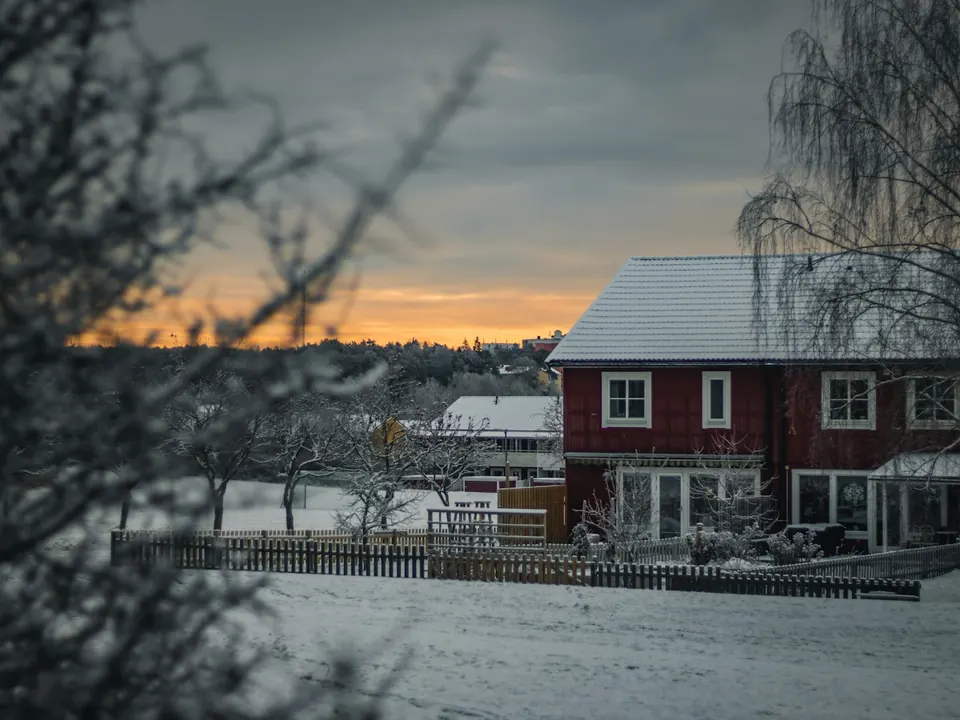
Picture a roof with a foot of snow on it in January. The outside air is well below freezing, but the attic underneath is not, because warm air from the living space leaks up through gaps in the ceiling and heat moves through thin insulation.
That warmth reaches the underside of the roof deck and melts the bottom layer of snow.
The meltwater runs downhill under the snow blanket until it reaches the eave. The eave overhangs the outside wall, so there is no heated house beneath it, and it stays as cold as the outdoor air. The water freezes there.
Next day the same thing happens, and the new water freezes on top of yesterday's ice. Over a week or two of snow and sun, that edge of ice can become a thick ridge.
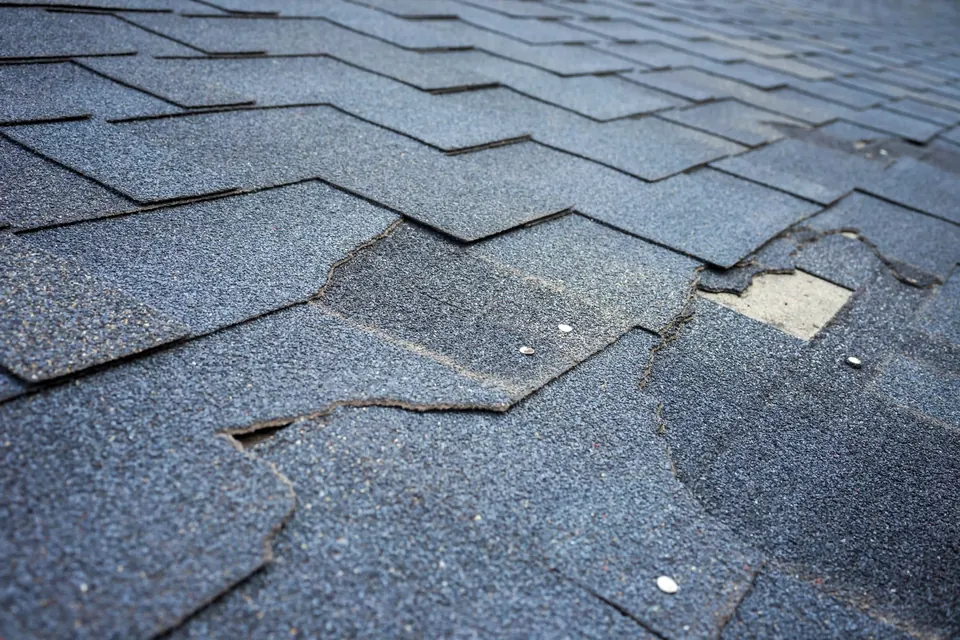
Once the ridge is tall enough, water coming down the roof has nowhere to go. It pools behind the ice in a shallow pond. Shingles are built to shed water running downhill, not to hold back standing water, so the pond works its way up and under the shingle courses, past the nails, and onto the wood deck below.
Why this part of New York gets so many
Ice dams need three things: snow on the roof, heat escaping into the attic, and outdoor temperatures that hover around freezing so melting and refreezing take turns. The Utica area has all three.
Lake-effect snow off Lake Ontario can leave deep snow on roofs for long stretches, and the freeze-thaw cycles of late winter keep feeding the ice.
Many homes here are older, built before attic air sealing was common, with insulation that has settled or was never deep to begin with.
Additions and finished attic spaces, where the ceiling follows the roof slope, are especially prone because there is little room for insulation and air flow.
What an ice dam does to a house
The ice itself is heavy and can pull gutters loose or bend them, but the bigger cost is the water. Once it gets under the shingles, it soaks the deck boards and runs into the wall cavity or onto the attic insulation. Wet insulation stops insulating, which lets more heat escape and makes the next dam worse.
Inside the house, the signs tend to show up along outside walls:
- Water stains or peeling paint on the ceiling near an exterior wall
- Damp or stained drywall around the tops of windows
- Drips from window trim or a door header during a thaw
- Musty smells in closets or upstairs rooms on the eave side
- Rust streaks or stains on the siding below the gutter
Outside, a long row of thick icicles along the gutter line is the classic warning. Icicles alone do not prove water is getting in, but heavy icicles with a solid band of ice behind them at the roof edge mean the conditions are there.
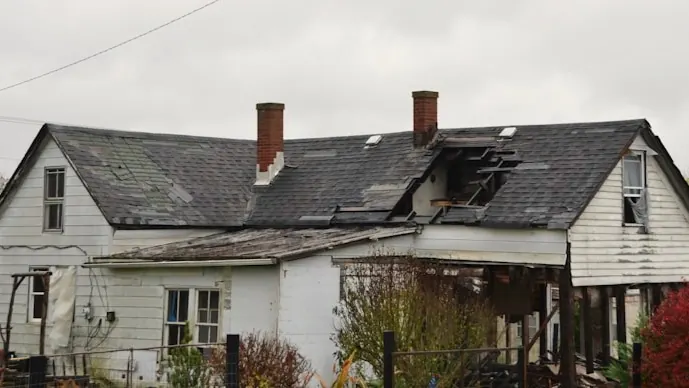
Over repeated winters, the deck along the eave can rot, the shingles there wear out early, and mold can grow in the attic and wall cavities where nobody sees it.
What to do if you have an ice dam right now
First, stay off the roof. A snow-covered roof with ice at the edge is one of the most dangerous surfaces around a house, and ladders slip on ice at the bottom as easily as at the top. Do not climb up to chip ice, and do not lean a ladder against an iced gutter.
- Catch the water inside. Set buckets and towels under drips, move furniture and electronics away from the wall, and if a ceiling bulges with water, keep people out from under it.
- Take photos of the stains, the drips and the ice from the ground. Note the date. Photos taken while the water is coming in are far more useful later than a description.
- Pull snow off the lower part of the roof from the ground with a roof rake, if you can do it safely. Clearing the first few feet above the eave removes the snow that feeds the dam. Stand clear of falling snow and ice, and keep the rake well away from power lines.
- Do not chip at the ice with a hammer, an axe or a shovel. That breaks shingles and can tear the edge of the roof, which turns a winter leak into a bigger repair.
- Do not throw rock salt on the roof. It damages shingles, corrodes metal flashing and gutters, and kills plants below the drip line.
Some homeowners lay a calcium chloride ice melter in a long sock across the ice dam to melt a channel through it. It can open a path for trapped water, but it still means getting close to the roof edge, and it does nothing about the cause.
Companies that remove ice dams usually use low-pressure steam rather than tools, because steam melts the ice without cutting into the shingles.
When the weather breaks, have the roof and attic looked at. A leak that stops when the ice melts has usually left wet decking, wet insulation or damaged shingles behind, and those do not dry out properly on their own.
The real fix: keep the roof deck cold
Heat cables, raking and ice removal all treat the ice. The fix that lasts treats the heat.
If the underside of the roof deck stays close to the outdoor temperature, snow melts evenly from the sun rather than from below, and there is no warm-roof, cold-eave split to build a dam. That comes down to three pieces of work, and they matter in this order.
1. Air sealing the attic floor
Most of the heat that causes ice dams rides up on air, not through the insulation itself.
Warm air slips into the attic through gaps around ceiling light fixtures, bath fan housings, plumbing and wiring holes in the top plates of walls, the attic hatch, and the open chase around a chimney.
Sealing those gaps with foam, caulk or fire-rated material for chimneys is usually the single most effective step. It is also the step most often skipped, because it is dusty, slow work done before any insulation goes in.
2. Enough insulation, evenly spread
Once the air leaks are sealed, insulation slows the heat that conducts through the ceiling. It has to be even and continuous.
A deep layer in the middle of the attic does little good if the insulation thins out to nothing over the outside walls, which is exactly where the eave sits and the dam forms.
An energy auditor or insulation contractor can measure what you have and where the gaps are.
3. Ventilation that actually moves air
Attic ventilation carries away whatever heat still gets through. Cold outside air comes in low at the soffit vents along the eaves and leaves high at a ridge vent or roof vents.
For that to work, the soffit vents have to be open rather than painted over or blocked by insulation, and there should be baffles that hold the insulation back so air has a clear path up the underside of the deck.
A ridge vent with no working intake below it moves very little air. Balanced ventilation is part of a properly installed roof, and it is checked and corrected as part of a roof replacement.
Ice and water shield: the backup layer
Even a well-sealed, well-vented house can get a small ice dam during a hard winter. Ice and water shield is the protection for that case.
It is a rubberized, self-adhering membrane laid directly on the deck along the eaves, in valleys and around penetrations before the shingles go on.
It bonds to the wood and seals around each nail that passes through it, so water that backs up under the shingles meets a waterproof layer instead of bare boards.
It cannot be added to an existing roof without taking the shingles off that area.
That is why it matters so much when a roof is replaced or when ice dam damage along an eave is repaired: the deck is open, wet or rotted boards can be replaced, and the membrane goes down before new shingles.
If your roof was installed without it, or with only a narrow strip at the edge, that is worth knowing the next time work is done.
Ice and water shield limits the damage from an ice dam. It does not stop the dam from forming. A house that keeps building thick ice every winter still needs the attic work above.
What does not fix ice dams
- Heat cables zigzagged along the eave can keep a channel open, but they use power all winter, can fail without warning, and leave the heat loss in place. Treat them as a stopgap for a problem spot, not a cure.
- Removing the gutters does not stop ice dams. The ice forms on the roof edge, not in the gutter, although packed gutters can make the ice heavier.
- Adding more roof vents without fixing the intake or the air leaks rarely helps, and a powered attic fan can pull warm house air into the attic through the same gaps.
- Replacing the shingles alone, with the same attic underneath, puts new shingles in the same conditions.
Getting the damage checked after winter
If you had ice along the eaves this winter, or stains showed up during a thaw, the useful next step is to find out what the water did on the way in.
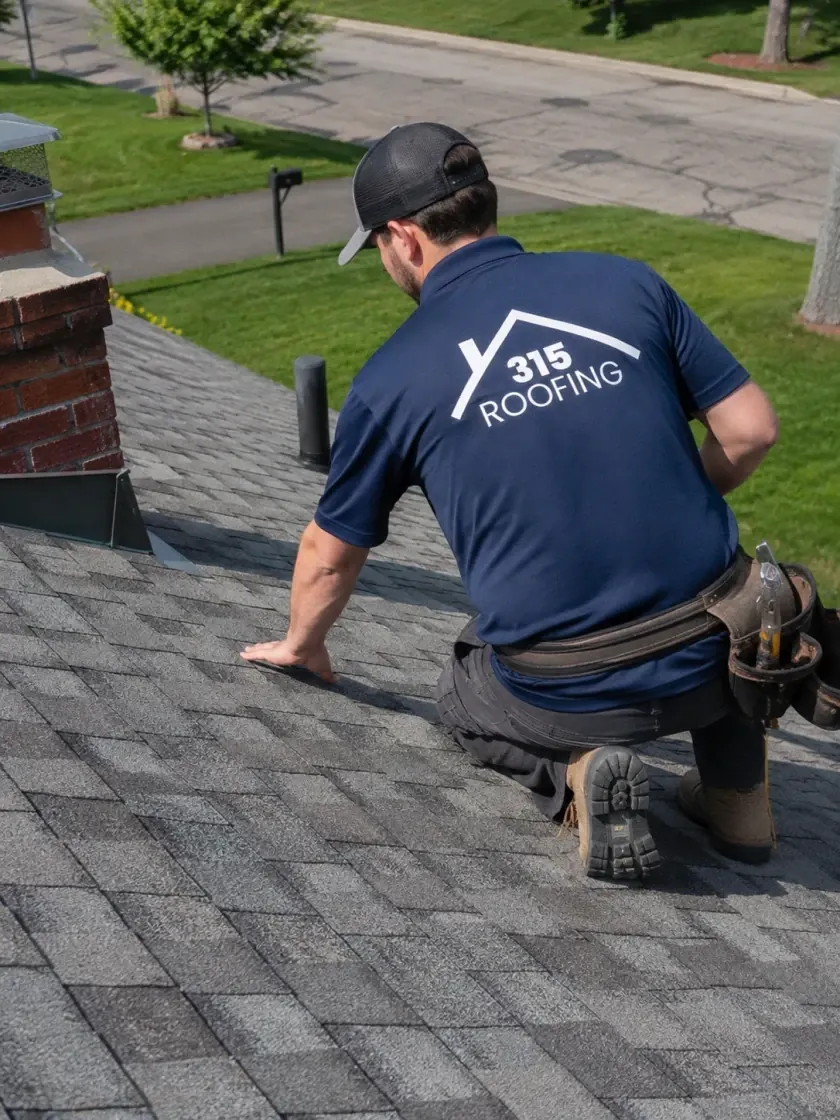
That means looking at the shingles and flashing along the eave from the roof, and at the deck, rafters and insulation from the attic. 315 Roofing does this as a free roof inspection and shows you photos of what is found.
Where ice has damaged the eave, the roof repair work is replacing the wet decking and shingles in that area and laying ice and water shield before the new shingles go on.
The scope comes in writing, as a quote within 24 hours of the visit, and the finished work comes with a 10-year workmanship warranty.
If the attic insulation or air sealing is behind the problem, we will tell you that plainly so you can have it handled by the right trade.