
The short answer
After wind, hail or ice damages your roof, stay off it and keep away from downed lines and hanging branches. Catch any water coming inside and move belongings out of its way. Photograph the damage from the ground and the inside of the house, with dates. Call your insurance company if you plan to file a claim, and have the roof inspected so the damage is found, photographed and described in writing before it gets worse.
First, make the house and yard safe
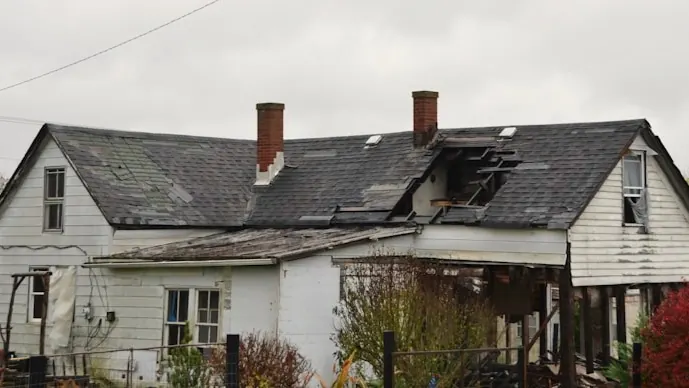
The roof can wait a few hours. People cannot be put at risk for it. Before anything else, walk the outside of the house from a distance and look for the hazards storms leave behind.
- Downed or sagging power lines, including the service line to your house. Stay well away and call the utility.
- Large branches hanging in trees over the roof or the driveway, which can fall later without warning
- A tree or limb lying on the roof. Do not go into rooms under it until someone has checked the framing.
- Water coming through a ceiling near light fixtures or outlets. Turn off power to that area at the panel if you can do so safely.
Do not climb onto the roof, and do not go up a ladder to look. A storm-damaged roof can have loose shingles that slide underfoot, weakened decking, debris and wet or icy surfaces. Many of the injuries after storms happen to homeowners who went up to check.
Stop the water inside
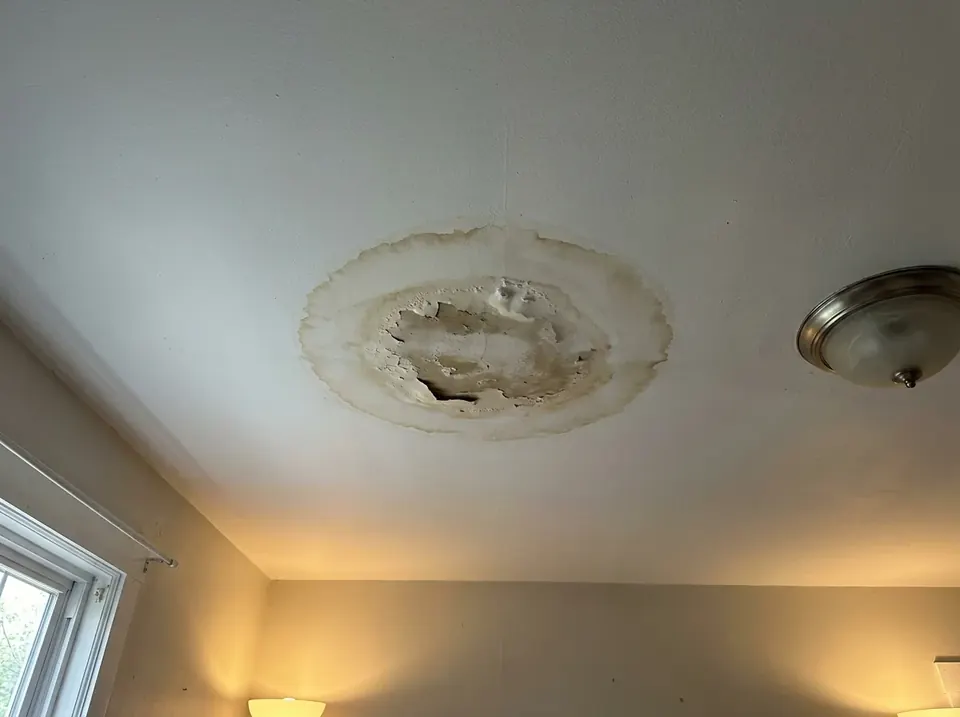
If water is coming in, the goal is to limit what it touches. Put buckets, pans or a tarp under drips and lay towels around them. Move furniture, rugs, electronics and boxes out of the wet area.
If you have an attic you can reach safely, a bucket on a board across the joists can catch water before it reaches the ceiling.
A ceiling that bulges or sags is holding water. Keep people and pets out from under it. Some homeowners poke a small hole at the lowest point to drain it into a bucket, which relieves the weight, but only do this if you can reach it safely and stand to the side.
Covering a damaged roof with a tarp can keep more water out until the repair, but it means working on the roof. Leave that to a roofer rather than doing it yourself in bad conditions.
Take photos before anything is cleaned up
A clear record made soon after the storm is useful whether you file an insurance claim or simply want the repair done right. Take it from the ground and from inside. Your phone is enough.
- Wide shots of each side of the house, so the roof and its surroundings are in the frame
- Close shots, using zoom, of missing shingles, lifted edges, bent flashing or gutters, and anything sitting on the roof
- Shingles, granules or pieces of flashing lying in the yard or the driveway
- Dents in gutters, downspouts, window wraps, siding, outdoor furniture or a car, which help show the size of hail
- Every water stain, drip and wet area inside, with something in the frame for scale
- Fallen trees and limbs before they are cut up and hauled off
Write down the date and time of the storm and when you first saw the damage. Keep receipts for anything you buy to protect the house, like buckets, tarps or fans.
What storm damage looks like on a shingle roof
Wind
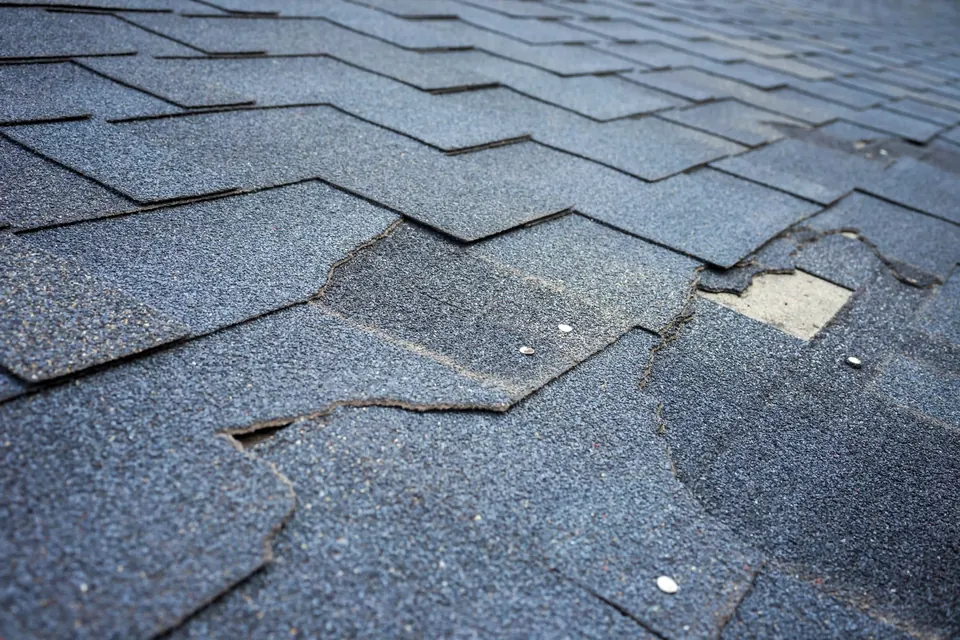
Wind gets under the edge of a shingle and lifts it. The shingle may tear off and leave a bare patch, or it may lift, crease and fall back into place.
A creased shingle often looks fine from the street, but its seal to the shingle below is broken and the crease is a weak line, so the next strong wind can take it. Wind also works at ridge caps, the edges of the roof and loose flashing.
Spring wind across the open valley here can do this even without a named storm.
Hail
Hail knocks granules off and can bruise or crack the mat of the shingle. From the ground, hail damage is hard to see. Up close it shows as dark spots where granules are missing, sometimes with a soft feel to the shingle underneath. Dents in gutters, vents and downspouts are a good sign the roof was hit as well.
Ice and fallen limbs
Heavy ice can tear gutters and drip edge loose, and ice dams push water under shingles along the eaves. A limb dropped onto the roof can punch through the deck or crack rafters, which is structural damage, not just shingle damage. Our guide to ice dams around Utica covers the winter side in more detail.
When to call, and who to call
If water is coming in, or a part of the roof is open, call a roofer as soon as the weather allows.
If the roof looks intact but the storm was strong enough to leave shingles in the yard or dents on the gutters, it is still worth having it checked.
Damage that does not leak today, like creased shingles or bruised hail spots, can leak months later, and it gets harder to connect to a single storm the longer you wait.
If you plan to file an insurance claim, call your insurance company and ask how they want the damage reported and what they need from you. Read your policy or ask your agent what it covers.
Every policy and insurer is different, and they are the ones who decide what is covered. Your photos and an inspection report give them a clear picture to work from.
Be careful with anyone who knocks on the door after a storm offering a free roof or pressing you to sign right away. Take your time, ask for the findings in writing, and make the decision when you are ready.
What a storm damage inspection records
A good inspection after a storm does more than say the roof is damaged. It records where and how, so you, and anyone else who needs to see it, can understand what happened.
- Each slope of the roof, with the damaged areas located and photographed
- Missing, creased, lifted or cracked shingles, and any spots where granules were knocked off
- Flashing, vents, pipe boots, ridge caps and the roof edge
- Gutters and drip edge
- The attic, where it can be reached, for wet decking, water marks and daylight
- What repair the damage calls for, whether that is a few shingles, a section of the roof or the whole roof
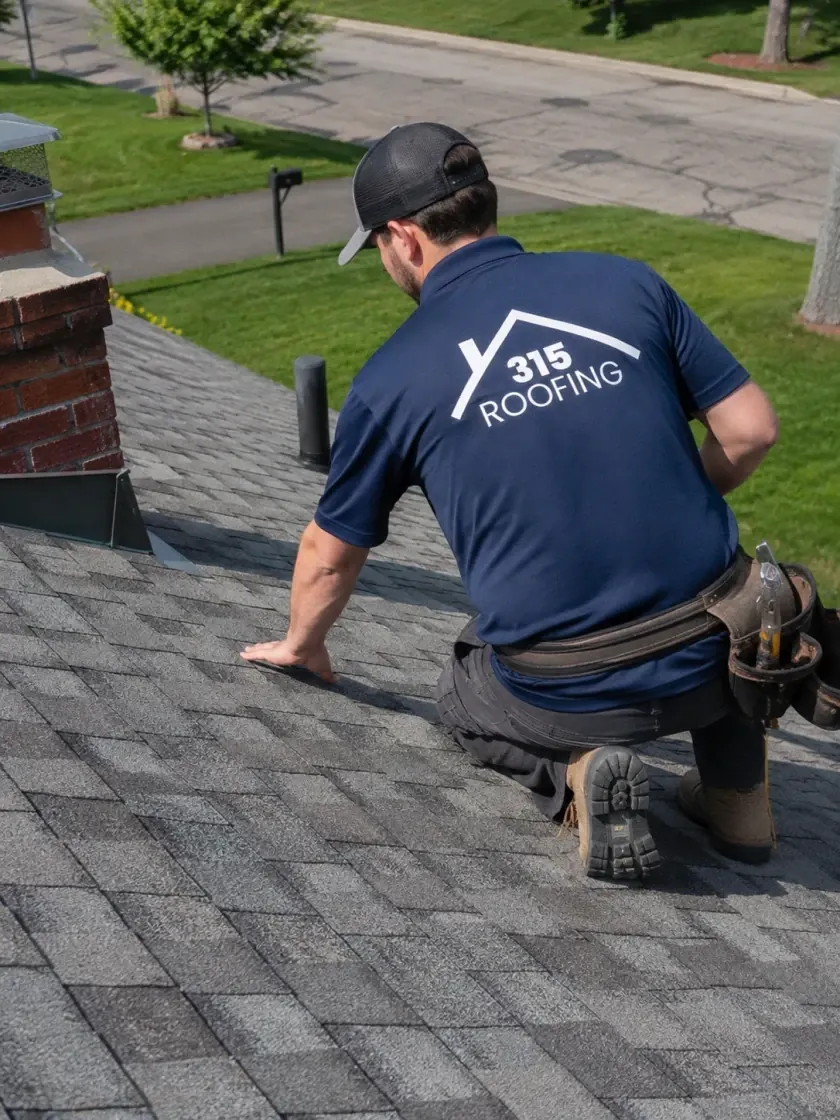
315 Roofing does this as a free inspection, and you see the photos of what is found. You get a written quote within 24 hours that says what needs to be repaired and with what.
You can share the photos and the quote with your insurance company if you are filing a claim. The repair itself is covered by a 10-year workmanship warranty. More on how the work is done is on the storm damage roof repair page.
A short checklist
- Stay off the roof and away from downed lines.
- Catch the water and move your belongings.
- Photograph everything from the ground and inside, with dates.
- Keep receipts for anything you spend protecting the house.
- Call your insurer if you are filing a claim, and ask what they need.
- Have the roof inspected and get the findings in writing.