
The short answer
Repair the roof when the problem is in one place and the shingles around it are still sound: a cracked pipe boot, loose flashing, a few shingles lost to wind. Replace it when the shingles are worn out across the whole roof, leaks keep turning up in different spots, the deck is soft or sagging, or there are already two layers on the house. One leak, on its own, rarely means you need a new roof.
Start with where the problem is
The most useful question is not how old the roof is but whether the problem is local or general.
A roof is a system of shingles, underlayment, flashing and deck, and most of the trouble on a shingle roof starts at a detail: the joint around a vent pipe, the metal against a chimney, the step flashing where a roof meets a wall, or a valley where two slopes meet.
When one of those details fails, the rest of the roof can be in perfectly good shape.
A general problem is different. If the shingles themselves are breaking down everywhere, fixing one spot only moves the next leak somewhere else. So the first job, before anyone talks about repair or replacement, is to find out which kind of problem you have.
That takes someone looking at the roof surface and the attic, not a guess from the ceiling stain.
Signs a repair is the right call
- The leak shows up in one area and traces back to a single source, such as a pipe boot, a chimney or a bathroom vent.
- A windstorm took off a handful of shingles, and the shingles around the bare spot still lie flat and feel flexible.
- Flashing has pulled loose or its sealant has dried out, but the shingles on the open slopes look and feel healthy.
- The roof is well short of the end of its useful life and has had no other problems.
- The deck around the leak is firm, or only a small section of it is wet.
In these cases a repair restores the roof to where it was before the damage. Paying for a full replacement would mean throwing away shingles with plenty of life left. A well-done roof repair replaces the failed part properly, rather than smearing sealant over it, so it holds as long as the roof around it.
Signs the roof needs replacing
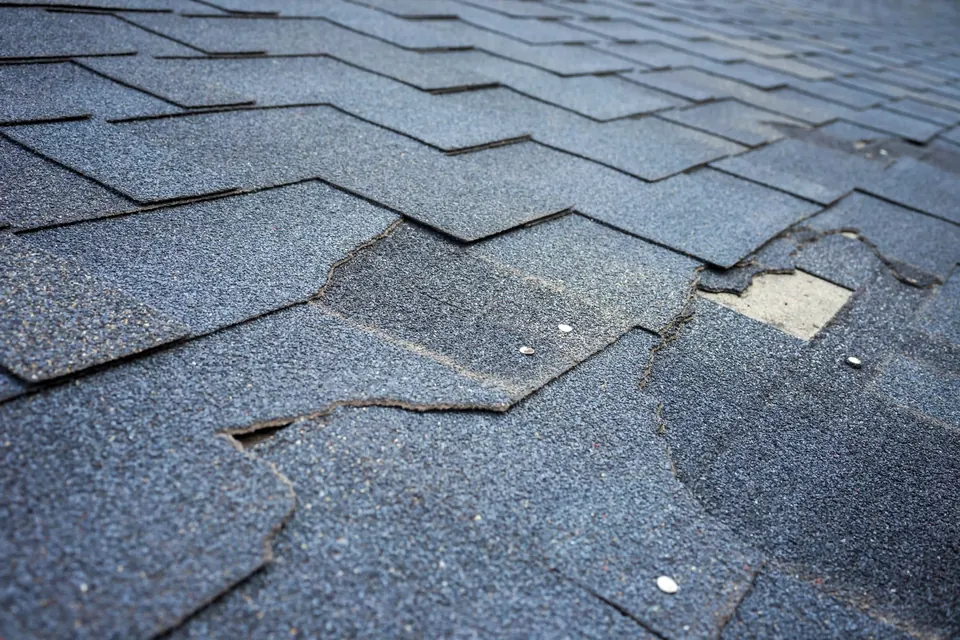
Asphalt shingles wear out from the top down. Sun and weather slowly strip the protective granules, the asphalt underneath dries out and stiffens, and the shingles start to lose their shape. When that is happening across the roof, you will usually see several of these together:
- Shingles curling at the edges or cupping in the middle, so the tabs no longer lie flat
- Bare, dark patches where granules have worn off, and heavy granule buildup in the gutters or at the bottom of downspouts
- Cracked or brittle shingles that snap rather than bend when lifted
- Leaks in more than one area of the house, or new leaks soon after earlier repairs
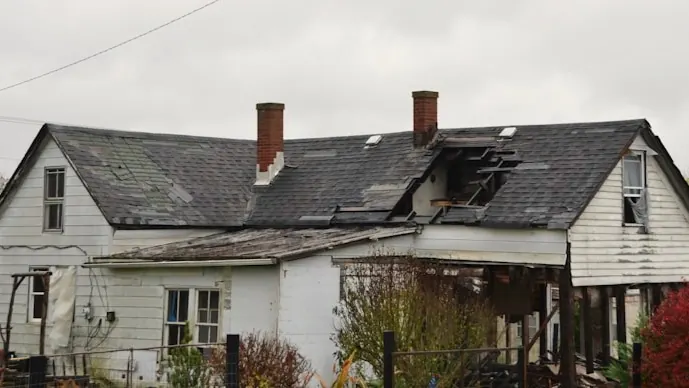
- A roof line that dips or sags between rafters, which points to a weak or rotting deck
- Daylight through the roof boards when you look from the attic
A single one of these is a reason to have the roof checked. Several of them together usually mean the shingles have reached the end of their life, and the money spent on repairs is better put toward a new roof.
Why one leak rarely means replacement
It is easy to see a brown ring on the ceiling and assume the whole roof has failed. Usually it has not. Water gets in at one weak point and then travels along the underlayment and framing before it shows, so a single stain often goes back to a single detail, and that detail can be fixed.
The cases where one leak does lead to a replacement are the ones where the leak is a symptom of something larger: the shingles are brittle enough that any repair cracks the ones around it, the deck under the leak has rotted across a wide area, or the leak is the latest of several.
An honest inspection should tell you which situation you are in and show you the evidence, rather than treating every call about a leak as a sale for a new roof.
Age, layers and the deck
Roof age
Age tells you how much life the shingles probably have left, which matters when you weigh the cost of a repair. Putting real money into a roof that is close to the end of its life buys less than the same repair on a younger roof.
If you do not know when your roof went on, a home inspection report, the previous owner or permit records for the property may say.
Shingle condition is still the better guide, because exposure, color, attic ventilation and the quality of the original install all change how fast a roof ages.
How many layers are on the house
Some older homes have a second layer of shingles nailed over the first. A layover hides the condition of the deck, adds weight, and traps heat, which can shorten the life of the top layer.
Building codes limit how many layers a roof may carry, and a roof that already has two usually has to be stripped before anything new goes on.
You can often count layers at the edge of the roof from a ladder at the gutter, but it is safer to have it checked during an inspection.
The condition of the deck
The deck is the plywood or board sheathing the shingles are nailed to. If it is soft, delaminating or rotted in many places, new shingles will not lie flat or hold nails properly. Small soft spots can be cut out and replaced during a repair.
Widespread damage is a strong sign that replacement is the honest answer, because the deck has to be opened up to fix it anyway.
A 315 Roofing replacement is a tear-off down to the deck, so the boards are checked and bad sections are repaired before new shingles go on.
The cases in between
Plenty of roofs fall in the middle: shingles with some wear, one leak, nothing dramatic. A few questions help here.
- How long do you plan to stay in the house? If you are selling soon, a solid repair may be all that makes sense. If you plan to stay for many years, a replacement now avoids paying for repairs and then a roof anyway.
- Is the damage on one slope? Sometimes the slope that faces the sun or takes the wind wears faster. Replacing one section is possible, but the new shingles will not match the faded ones, and the old slopes keep aging.
- What did the last repair cost, and how long ago was it? A roof that needs a repair every season is telling you something.
- Is the attic ventilation working? A roof that cooks in summer and builds ice dams in winter will wear out early whatever you do to the shingles.
None of these has a single right answer. The point is to make the call with the facts in front of you, not under pressure from a stain on the ceiling.
How to get a clear answer
Do not climb onto the roof to judge it yourself, especially if it is wet, icy or steep. From the ground, you can look for missing shingles, curled edges and a sagging ridge, and from the attic you can look for water marks and daylight. The rest needs someone on the roof.
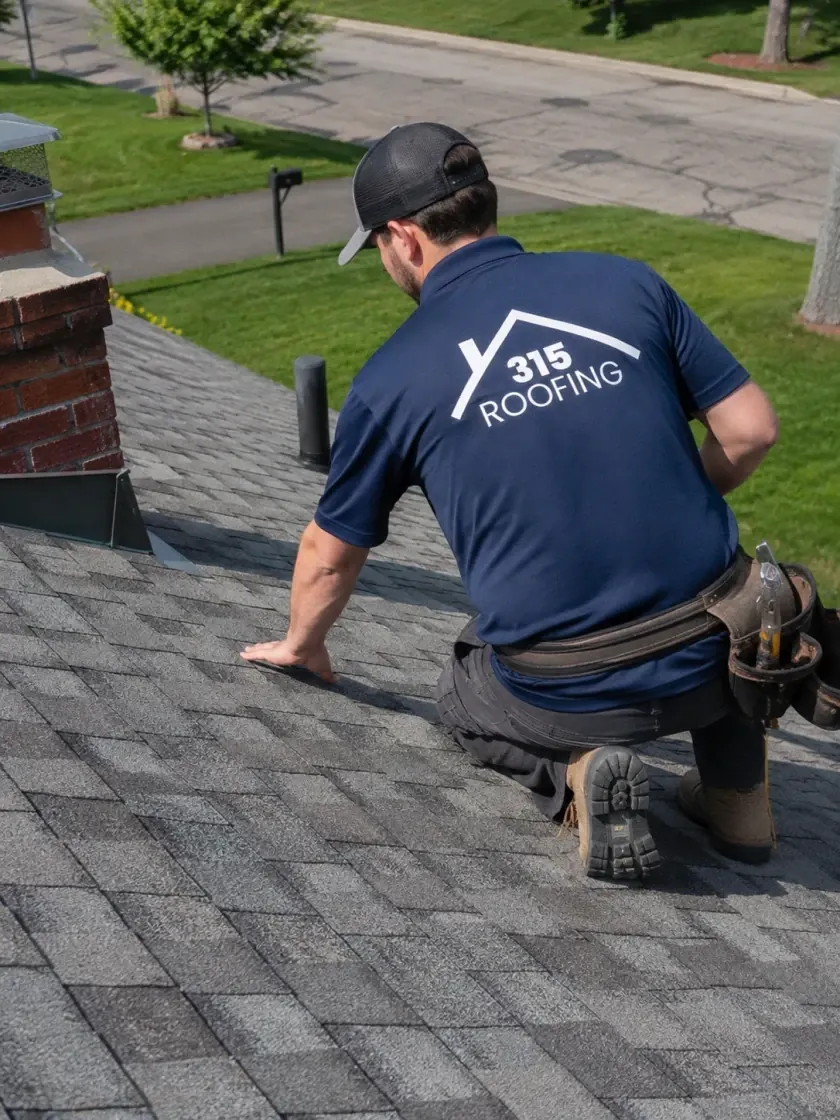
315 Roofing starts every repair or replacement question with a free roof inspection. You see photos of what is found, including the condition of the shingles and the problem spots, and a written quote follows within 24 hours.
If a repair will do the job, that is what the quote says. If the roof is worn out, the quote covers a roof replacement and the photos show why. Either way, the work carries a 10-year workmanship warranty, and the decision stays yours.